

Want More Happiness? Try These 9 Proven Tips Before You Retire
Retirement can be tougher than you think. Sure, you’ve crossed “The Starting Line” and now have more freedom than ever—but it also comes with big changes: shifting identity, evolving relationships, and the constant question: what now?
Here’s a concerning fact: the risk of depression rises by 40% after retirement.
But what if you could actively boost your happiness and truly enjoy this new chapter? Good news: science shows that you can.
I’m sharing insights from a comprehensive study that uncovers what really makes people happier. By applying these nine evidence-backed strategies, you can set yourself up for a joyful, fulfilling retirement.
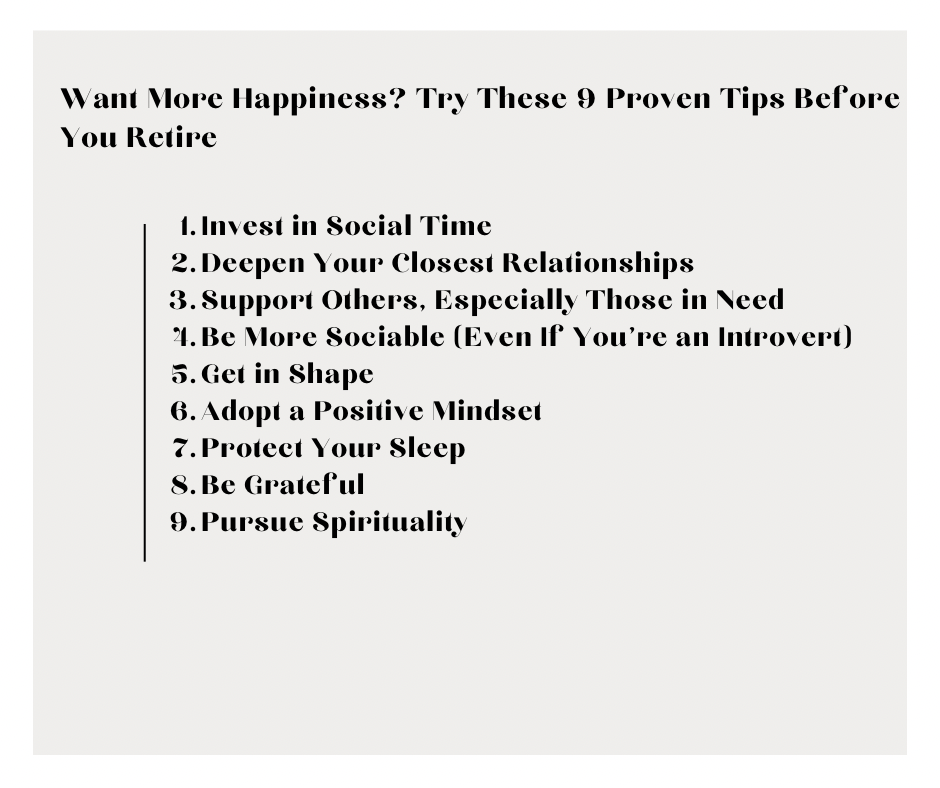
9 Proven Ways to Boost Your Happiness in Retirement
We all dream of a happy retirement. After decades of hard work, these years should be among the most rewarding of our lives. Yet, many retirees face unexpected struggles.
To help you thrive, these tips are drawn from “How Can People Become Happier? A Systematic Review of Preregistered Experiments” by Folk and Dunn—a review of 65 individual studies on what actually increases happiness.
Invest in Social Time — The #1 Happiness Booster
If there’s one thing that consistently predicts happiness at any age, it’s social connection. Studies show that retirees who intentionally stay socially engaged experience some of the biggest and most reliable boosts in well-being.
Why Social Time Matters
Humans are naturally social—and there’s science to prove it:
It boosts oxytocin, the “feel-good” hormone. It reduces stress hormones like cortisol. It activates reward centers in the brain, making you feel energized and purposeful. It protects against loneliness, which is as harmful as smoking 15 cigarettes a day.
In retirement, losing daily workplace interactions can create a surprising social gap. Filling it is essential for maintaining happiness and emotional vitality.
How to Increase Social Time
Here are some ways to connect more:
Use MeetUp to find clubs or groups that interest you. Join a local gym, pickleball league, or hiking club. Attend community events or participate in local groups. Take a moment to chat with your neighbors instead of just waving. Join a church or small group and actively participate. Volunteer for a local charity—for example, Freedom For Fido has been life-changing for many.
Tip: The goal isn’t just being around people—it’s meaningful, intentional connection. The more quality interactions you have, the happier you’ll feel in retirement.
Deepen Your Closest Relationships
Casual social interactions give quick bursts of joy, but your closest relationships are the foundation of long-term happiness. Retirement gives you something you didn’t have before: time to truly nurture your connections with loved ones.
Research consistently shows that people with strong, supportive relationships enjoy:
Higher life satisfaction Better physical health Longer lifespans
The Harvard Study of Adult Development, the longest-running study on human happiness, concludes:
“Good relationships keep us happier and healthier.”
Of all the factors studied since the 1930s, the strength of your closest relationships is the most important predictor of happiness.
Why Close Relationships Matter Even More in Retirement
During your working years, deadlines and schedules often compete with family and friends for your attention. In retirement, the question becomes: who do you want to spend your days with?
Strong relationships provide:
Emotional stability during life transitions A sense of belonging and mutual support Meaning and purpose beyond accomplishments Companionship throughout life Motivation to stay active and engaged
Beyond a romantic partner, focus on building a core inner circle of friends—people you could call in the middle of the night if something goes wrong. Invest intentionally in trust, closeness, and mutual support with those you can truly be yourself around.
Tip: Retirement is the perfect time to strengthen your bonds, because these relationships pay the biggest happiness dividends over a lifetime.

Support Others — Especially Those in Need
Retirement gives you a rare gift: time affluence—something most of us lacked during our working years. The question becomes:
“How can I use my newfound time in the best way?”
What does “best” mean? Ideally, it’s something that:
Brings you happiness or a sense of purpose Gives you a sense of accomplishment Involves activities you enjoy Helps others
Research—and life experience—shows that one of the most fulfilling ways to spend your time is by supporting those in need. As the saying goes, the gift really does go to the giver.
Retirement is the perfect time to give back. If you’re struggling with the transition, start by:
Identifying a need in your community Finding a way to help, even in small ways
It doesn’t have to be huge. For example, a few weeks ago, I helped a low-income person move an RV they had received as a donation. It only took a few hours, but it made a life-changing difference for them.
Tip: Start small, stay consistent, and watch how helping others boosts your own sense of happiness and purpose.
Be More Sociable — Even If You’re an Introvert
Let’s be honest: being social can be hard. We’ve all felt that anxiety—like scanning a lunchroom in school, looking for a friend to sit with. Sometimes it’s just easier to stay home in your comfort zone.
But here’s the key: resist that tendency.
Look for opportunities to connect:
Smile at someone in the grocery store Start a conversation with a stranger Say yes to social invitations, even if it’s not your first choice
Personally, I attend one conference per year in my writing field. I don’t always love conferences (after years of attending too many during my working life, burnout is real), but they’re an excellent way to meet people who share your interests. I’ve made many friends in the personal finance world this way.
For 2026, I’m stepping it up:
Speaking at CampFI in January Leading a workshop at the EconoMeconference in March
The takeaway? Relationships matter (see Items #1 and #2). The best way to build new connections is to put yourself out there—even if it feels uncomfortable.
Small social risks lead to big emotional rewards.
Like any skill, the more you practice being sociable, the easier it gets. Take a small risk today—it might pay off in ways you never imagined.
Get in Shape
We all know exercise is good for us, yet too often we make excuses. But if you want a quick mood boost, nothing works better than a hike in nature—especially in the Appalachian Mountains, one of the reasons we retired here!
Research shows that regular exercise:
Improves mental health Enhances sleep Increases healthspan (the number of healthy years before decline) Boosts self-image Improves overall mood and quality of life
I’ve invested in my own home gym as part of a cabin expansion project. At 62, I’m in the best shape of my life. Staying active for decades has taught me that fitness isn’t just about looks—it’s about feeling strong, capable, and energized.
You don’t need a gym to reap the benefits. Start simple: take a walk today.
Tip: I chose “Stay Strong” as the motto for my new gym. I’m adopting it for the next decades of my life—and I encourage you to do the same. Make strength, movement, and health a priority in your retirement.
Adopt a Positive Mindset
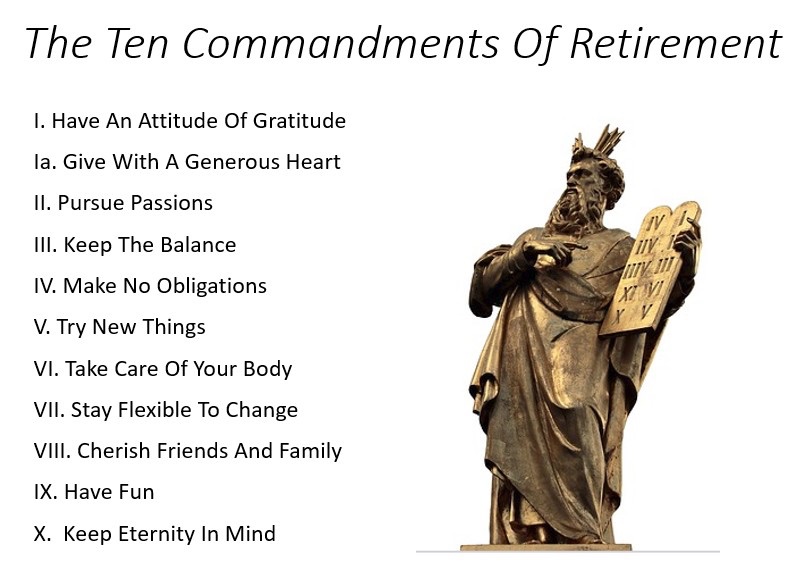
One of the best things I did before retiring was write “The 10 Commandments of Retirement”—a personal guide for how I wanted to live my life in this new chapter. I hung it on my office wall and have read it countless times over the past 7½ years. (Over 20,000 of you have read it too—thank you!)
Looking back, I realize how much of the guidance focuses on mindset. Research confirms it: intentionally cultivating a positive mindset is a key driver of happiness.
To boost your happiness:
Focus on the positive as much as possible Choose optimism in daily situations Remember, your mindset is more under your control than you think
Tip: Positivity isn’t just a “feel-good” idea—it’s a daily practice that shapes how you experience retirement. Start small, notice the good, and watch your overall happiness grow.
Protect Your Sleep
When I retired, one of the best changes we made was our sleep routine.
During my working years, I’d collapse into bed exhausted at the end of the day. Now, I’m more relaxed. For the past 7 years, my wife and I spend the last 30 minutes of our day reading in bed before turning off the lights.
The results? I fall asleep faster, sleep more deeply, and wake up feeling more rested than ever.
Poor sleep isn’t just tiring—it hurts your health and happiness. I know from experience.
If you’re struggling with happiness in retirement, start with your sleep habits. Read up on resources like “13 Healthy Sleep Habits” from MD Anderson and apply as many as you can.
Tip: Sleep matters. Protect it, and you’ll see your energy, mood, and overall well-being improve dramatically.
Be Grateful
Interestingly, the study found that specific expressions of gratitude are most impactful on our happiness. Rather than being “generally” thankful, take the time to appreciate the details in your life. Think about the people who have made an impact in your life, and take a step to show them your gratitude. Write an old-fashioned note card, and snail mail it to them. Targeted gratitude fuels connection – and happiness.
Some other ideas:
- Look up at the trees the next time you’re outside.
- Be thankful for the beauty of nature.
- Be thankful for the ones you love.
- Be thankful for your health, your life.
You get the point. Be intentional with your gratitude, and think specifically about the things you’re thankful for in your life.
It’s been proven to make you happier.
Pursue Spirituality

Focusing on your spiritual life is a key to long-term happiness.
Even if you’re not naturally spiritual, it’s worth giving it a try. Research shows that nurturing your spiritual side can improve well-being, especially by reducing stress and overthinking.
Spirituality doesn’t have to follow a specific path—it’s about finding what gives your life meaning and reflection. Carve out time to introspect, meditate, pray, or reflect—whatever resonates with you.
Tip: Prioritizing your spiritual life isn’t just “nice to have.” Studies show it can make you happier, calmer, and more centered.
Conclusio
Your Turn
Now I’d love to hear from you.
Are you happy in retirement?
If so, which of these nine strategies do you use to boost your happiness—and how do they show up in your daily life?
And if you’ve discovered other ways to stay fulfilled and joyful in retirement, share them. Your experience might inspire someone else who’s still finding their rhythm in this new chapter.
Let’s learn from each other.